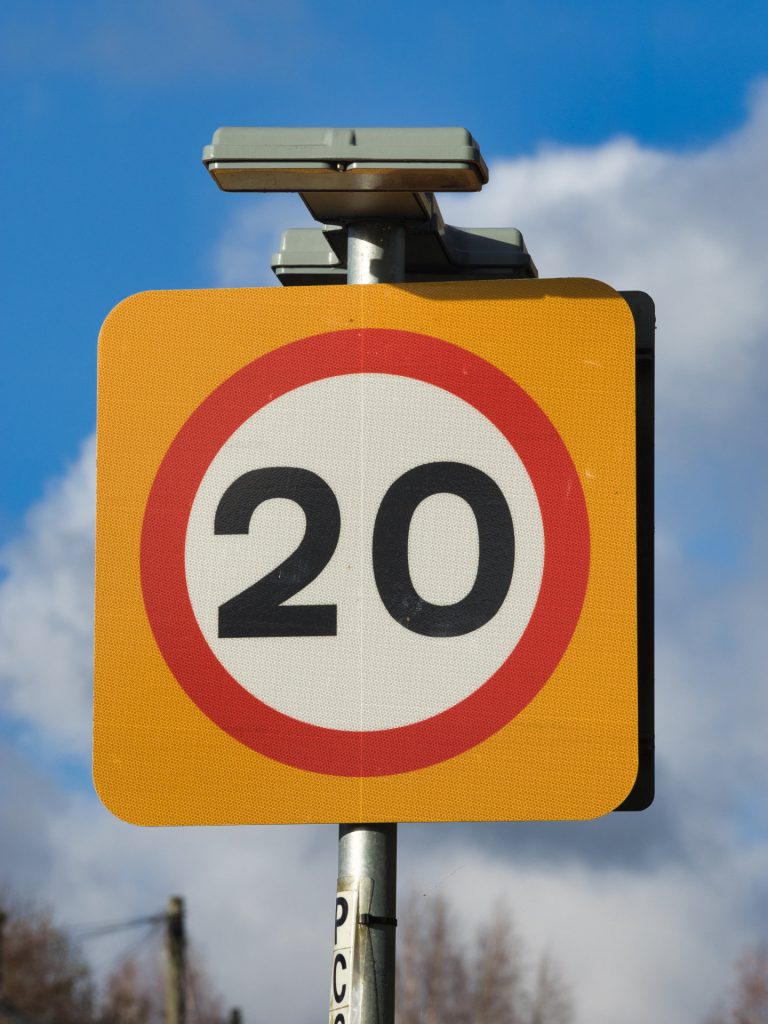

Cheltenham Civic Society (CCS) is highly critical of the consultation by Gloucestershire County Council (GCC) being undertaken on its proposal to cover much of Cheltenham with a blanket 20mph speed limit zone.
In its full response submitted to GCC, the Society describes the consultation as a “disappointing and weakly-evidenced exercise”, which risks repeating the mistakes GCC made during the controversial Boots’ Corner closure proposals a few years ago.
While supporting the objective of improving road safety and reducing casualties, the Society says the consultation fails to demonstrate why many collisions occurred, whether speed was a significant factor and why imposing a town-wide 20mph speed limit represents the most effective solution.
CCS Chair, Andrew Booton, said: “Once again GCC appears to have confused correlation with causation.
“The consultation shows where collisions happened but provides remarkably little evidence explaining why they happened.
“The majority of incidents identified appear to have occurred at junctions, crossing points and locations where different road users interact. Yet the Council has not demonstrated that excessive speed was the primary cause of those incidents or that a blanket 20mph limit is the most effective response.
“Good transport policy should be built on evidence, analysis and targeted interventions. Instead, residents are being asked to support sweeping restrictions across large parts of the town without being given the information necessary to understand whether those restrictions will actually address the problems identified.”
The Society believes resources would be better directed towards targeted engineering improvements, better pedestrian crossings, junction redesign, road maintenance, enforcement and education measures that address proven causes of risk.
Mr Booton added: “What is most disappointing is that GCC appears not to have learned the lessons of the Boots’ Corner consultation.
“That scheme became deeply controversial because the evidence base, assumptions, objectives and claimed benefits did not stand up to proper scrutiny. Public confidence was damaged because data was presented selectively and without sufficient transparency or context.
“For a Highway Authority with statutory responsibilities and a legal duty to secure best value for taxpayers, producing a consultation of this quality is simply not good enough.”
While supportive of lower speeds in spaces shared by people and vehicles, such as parts of the High Street and around schools, CCS says any measures must be evidence-led, proportionate and tailored to local circumstances rather than imposed as blanket policies.
In its formal consultation response, the Society has also called on GCC to strengthen the evidence base, publish fuller supporting data and demonstrate a clear causal link between identified problems and proposed interventions before proceeding further.
Click here to read or download the Society’s full response to GCC’s consultation.