

Media Enquiries
Cheltenham Civic SocietyCheltenham Civic Society
DonateJoin us
  • Welcome
  • Community hub
  • Events
    • Heritage Open Days
  • Planning
    • Planning Forum
  • Campaigns
    • Successful Streets
    • Plaques Maps
    • Battlefield Crosses Museum
  • About us
    • The Trustees
    • History
    • Join us
    • Corporate membership
    • Policies
  • News
    • Newsletters
  • Downloads
DonateJoin us

Circumspice 22: answer to mini-quiz item in the summer edition of OurTown

Posted on Today at 8:43 am
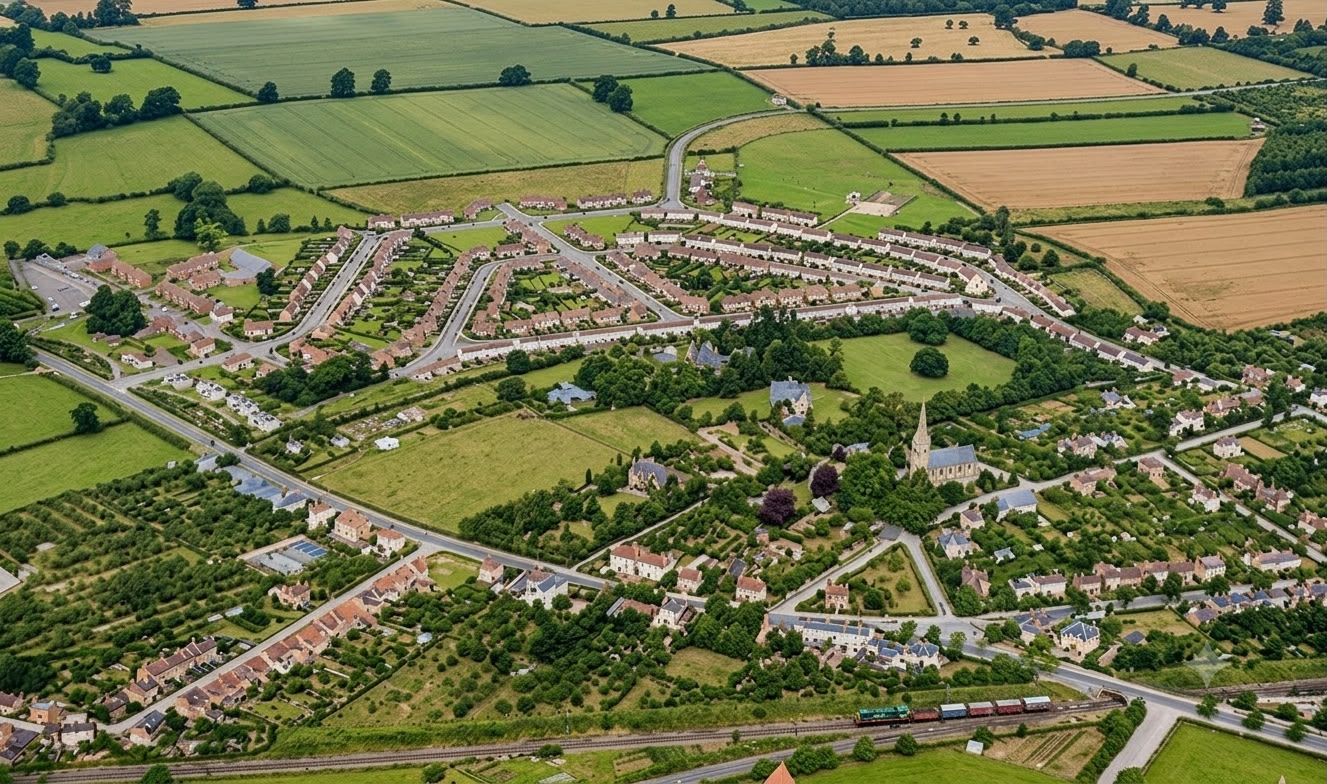
The St Mark's estate in 1928.

How Cheltenham turned the post-war promise of “Homes Fit for Heroes” into a carefully planned neighbourhood on the St Mark’s estate, also known as the Poet’s estate.
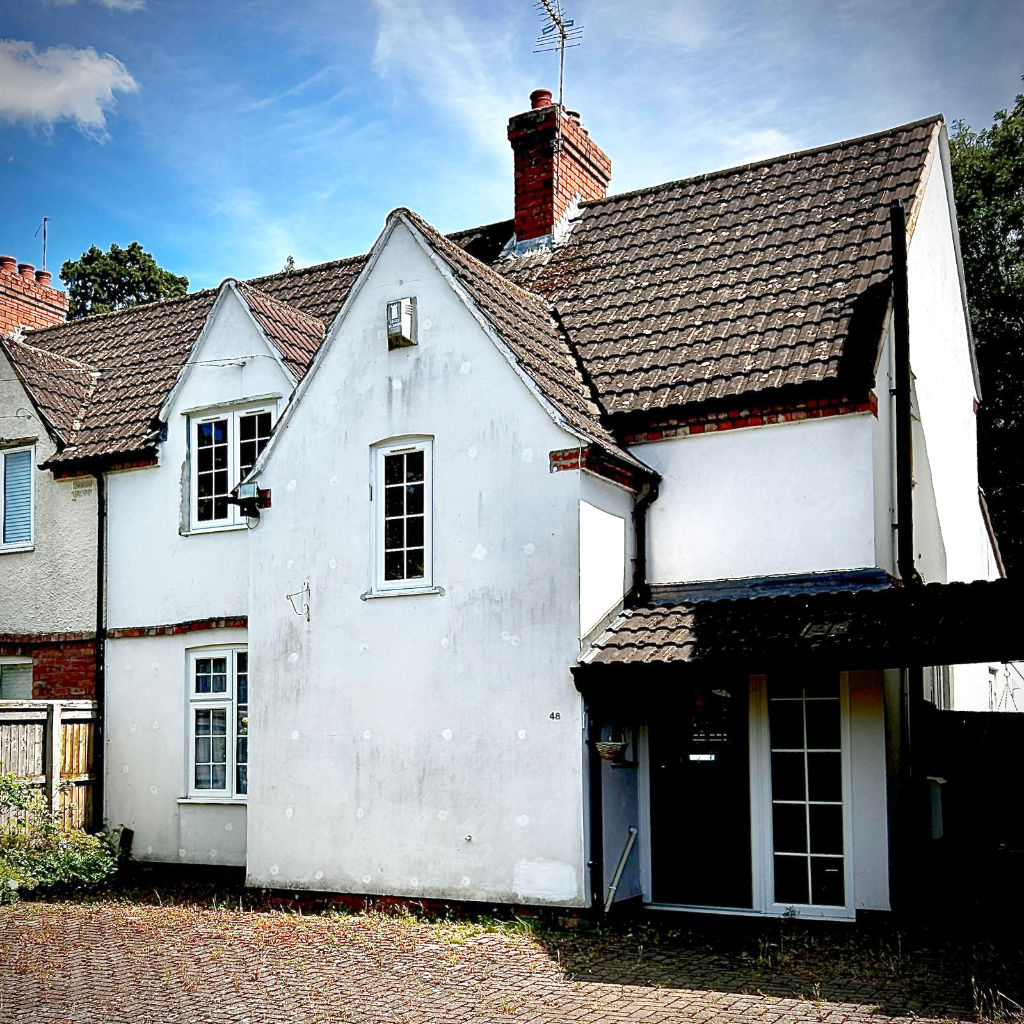
One of the St Mark's estate houses.This house on Milton Road is typical of the homes on the St Mark's estate.
This house on Milton Road is typical of the homes on the St Mark's estate.
The St Mark's estate – early days

The Borough Council bought land from the Arle Court estate in 1919, and the first houses were ready by January 1921. This was more than a building programme: it marked a new civic commitment to providing well-designed homes for ordinary families at a moment of acute housing need.

The Addison Act of 1919 gave local government a new responsibility for house building and helped turn national housing policy into local action. Britain faced a severe shortage after the First World War, and public subsidies allowed councils such as Cheltenham to build homes at a scale and standard the private sector could not then provide.

The estate also embodies the ideals behind Lloyd George’s 1918 promise of “Homes Fit for Heroes” and the 1918 Tudor Walters Report, which argued for better quality as well as greater quantity in new housing. Its Arts and Crafts influence, wide tree-lined streets, varied house types, and generous gardens show how national reform took on a distinctive local form, with Cheltenham Borough Council assuming the new roles of planner, builder, and municipal landlord.

Although the initial funding under the 1919 Act did not last, building continued under later housing legislation until 1933. The result was an estate shaped by both public purpose and changing economic realities, with some later houses built for private sale.

Britain’s public housing programme grew out of the unsettled years after the First World War. Across Europe, governments were falling, borders were being redrawn, and revolutionary movements were challenging the political order.
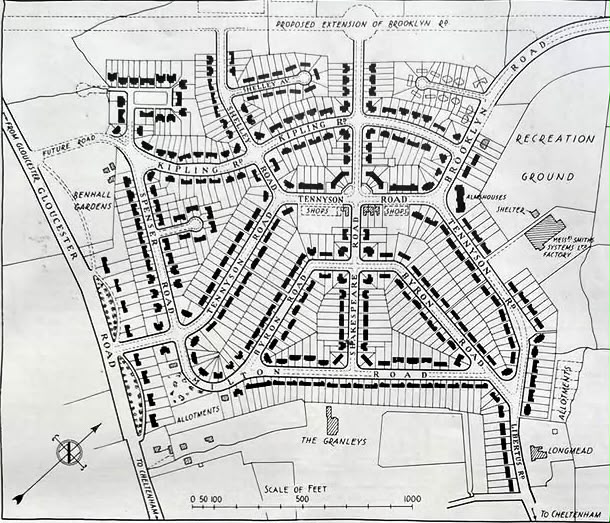
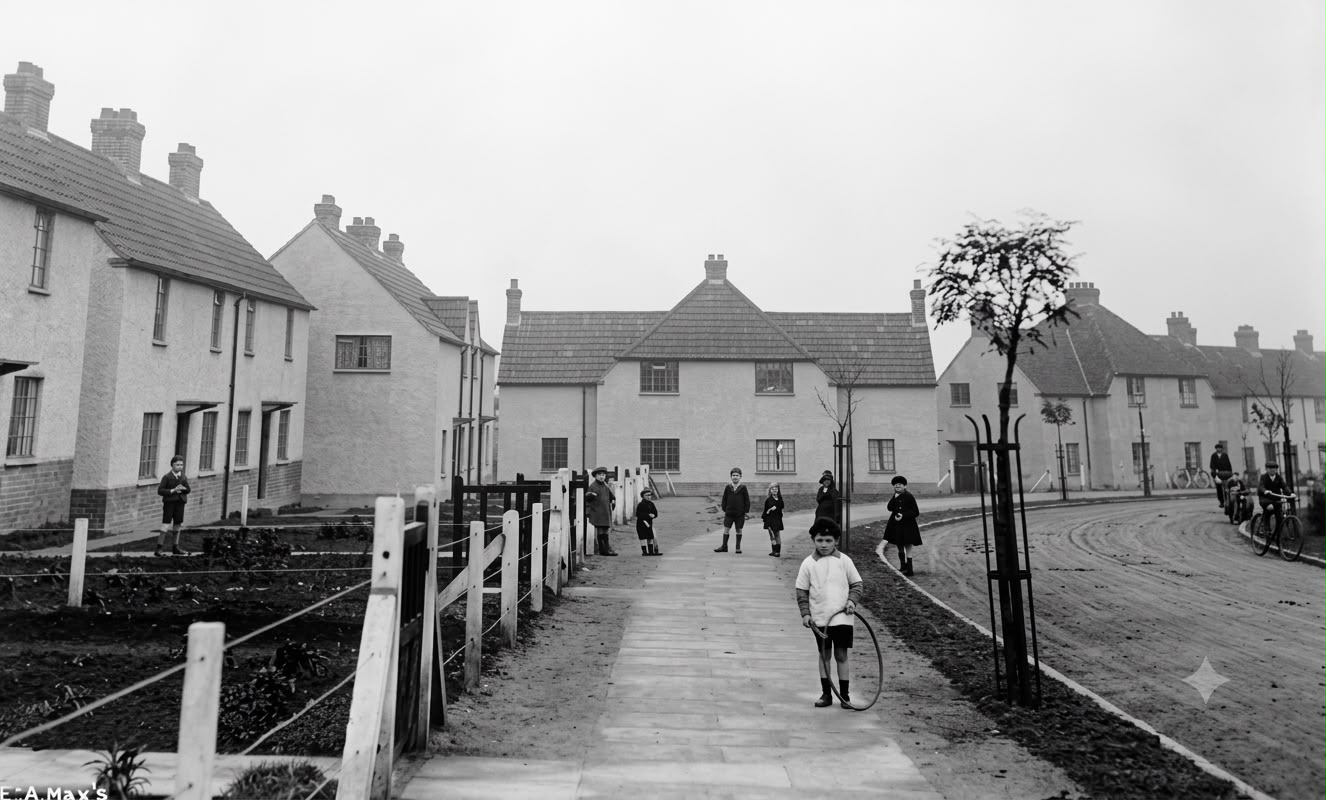
The St Mark's estate in 1934.

British politicians watched these events closely, particularly after the Russian Revolution of 1917 and the revolutionary upheavals in Germany, Hungary and Bavaria in 1919. There was civil war in Ireland too. Housing became part of a wider question about how democratic government could respond to public pressure and social change.
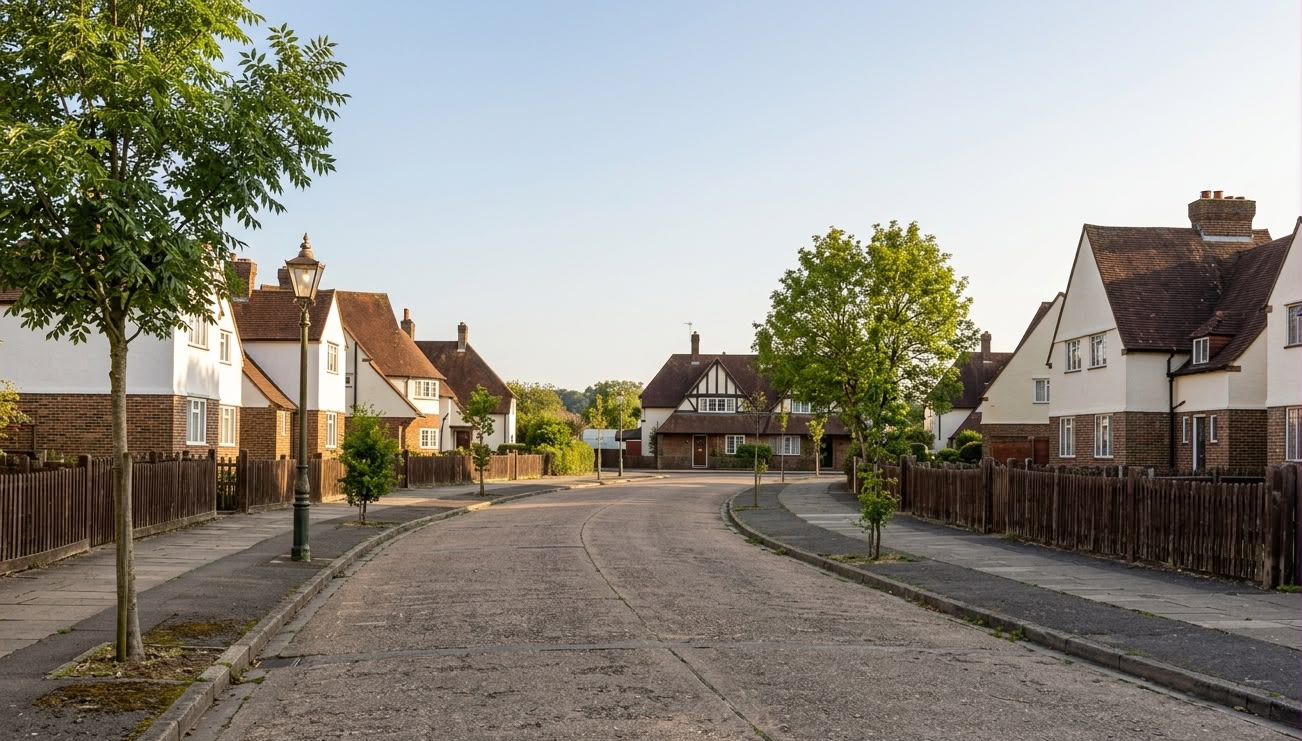
Kipling Road in the St Mark's estate.

In Britain, demobilisation, inflation, unemployment and industrial unrest gave that question urgency. Better homes were seen not only as a matter of health and comfort, but as a visible promise that ordinary families would share in the peace that followed war.

The Poet’s Estate was a local example of national reconstruction. Its streets, gardens, and family houses reflect a practical civic belief that good homes can support healthier lives, stronger communities, and a more stable democracy.

Previous Post
First Blue Plaque to celebrate a Cheltenham codebreaker

First Blue Plaque to celebrate a Cheltenham codebreaker

29 Jun at 8:28 pm

County civic societies express concerns about local government reorganisation

20 Jun at 5:44 pm

Flawed 20mph consultation risks repeat of Boots’ Corner mistakes

19 Jun at 5:38 pm

Bold Cavendish House proposal could create a new heart for Cheltenham

28 May at 6:53 am

Circumspice 21: answer to mini-quiz item in the spring edition of OurTown

24 Mar at 5:28 pm

Archives

Corporate Members

Bence Builders Merchants
Cheltenham Ladies' College
County To County
Leckhampton Builders
hcrlaw
Cape Homes
EvansJones
University of Gloucestershire
Willans LLP Solicitors
Everyman Theatre
Savills

The Society welcomes new Corporate Members – see our Corporate Membership page

Cheltenham Civic Society is affiliated to Civic Voice, the national organisation for the civic movement in England.

Cheltenham Civic Society
Facebook
X
Instagram

Achievements

  • The Gordon Lamp
  • The Holst Statue
  • The Montpellier Bandstand
  • The Battlefield Crosses

Archives

  • AGM and Trustees’ Minutes
  • Planning Forum Minutes
  • Newsletters

Plaques & Awards

  • Commemorative Plaques
  • Civic Awards
  • Civic Awards Nominations
  • Previous Awards

Parmoor | 26 Cambray Place | Cheltenham | GL50 1JN

© 2026 Cheltenham Civic Society | Affiliated to Civic Voice | Registered Charity No. 1166580

Policies

Website thanks to: thinwhite.co.uk

Manage Cookie Consent
To provide the best experiences, we use technologies like cookies to store and/or access device information. Consenting to these technologies will allow us to process data such as browsing behaviour or unique IDs on this site. Not consenting or withdrawing consent, may adversely affect certain features and functions.
Functional Always active
The technical storage or access is strictly necessary for the legitimate purpose of enabling the use of a specific service explicitly requested by the subscriber or user, or for the sole purpose of carrying out the transmission of a communication over an electronic communications network.
Preferences
The technical storage or access is necessary for the legitimate purpose of storing preferences that are not requested by the subscriber or user.
Statistics
The technical storage or access that is used exclusively for statistical purposes. The technical storage or access that is used exclusively for anonymous statistical purposes. Without a subpoena, voluntary compliance on the part of your Internet Service Provider, or additional records from a third party, information stored or retrieved for this purpose alone cannot usually be used to identify you.
Marketing
The technical storage or access is required to create user profiles to send advertising, or to track the user on a website or across several websites for similar marketing purposes.
  • Manage options
  • Manage services
  • Manage {vendor_count} vendors
  • Read more about these purposes
View preferences
  • {title}
  • {title}
  • {title}