

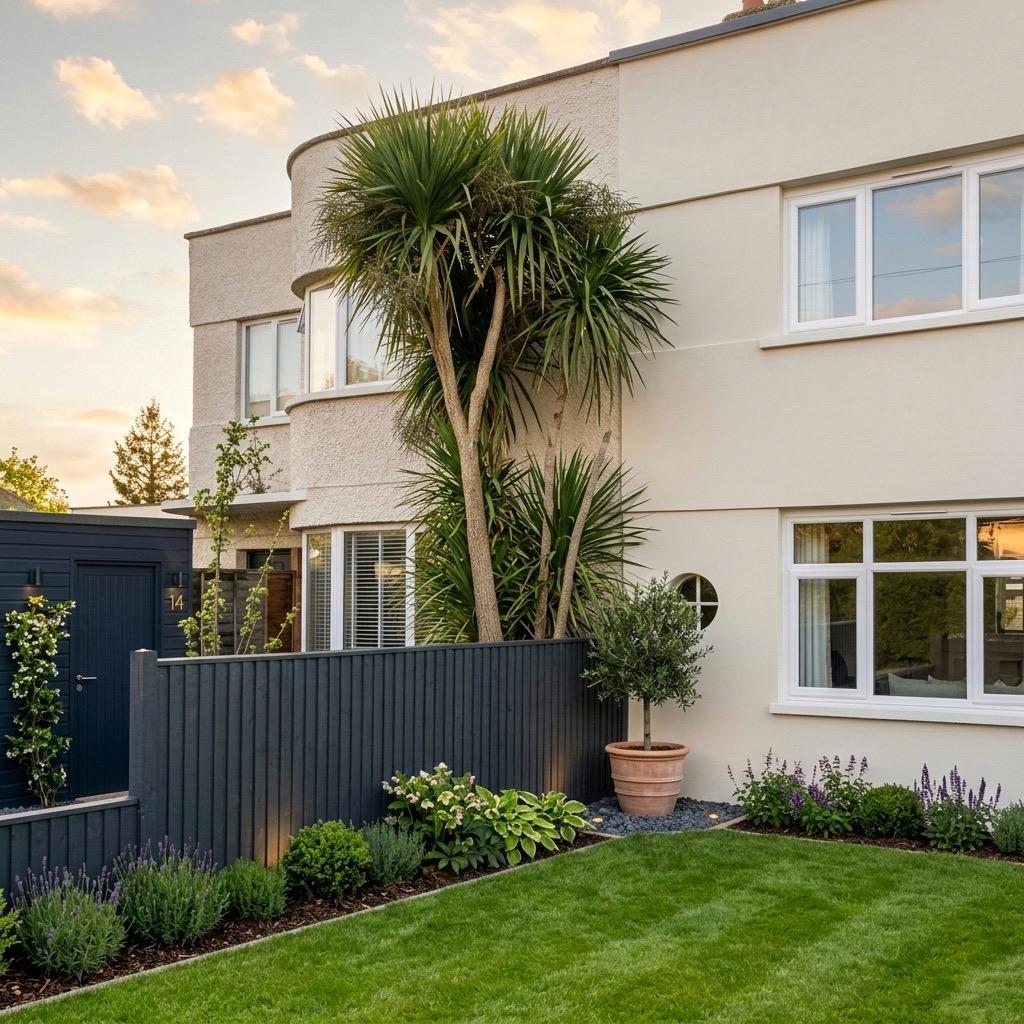
Miami Beach Moderne? Not quite. Where in the town is this, and why is the Daily Mail Ideal Home Exhibition of 1934 so significant for interwar suburban development and style?
The house above is one of a group of Moderne‑style, flat‑roofed semi‑detached houses near the junction of Arle Drive and Arle Road. They were built in 1934-35 to the design of a local architect, F. Howard Allen.
The houses are typical examples of the ‘Suntrap’ type, characterised by smooth wall surfaces, flat roofs, and wide windows, sometimes incorporating curved glazing.
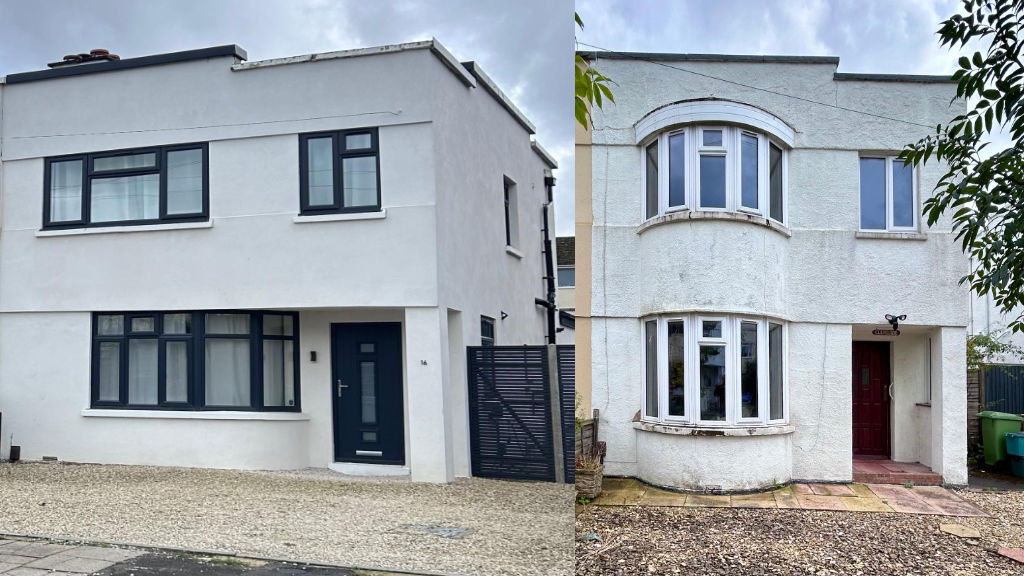
In October 1934, the local estate agents Engall & Cox advertised a choice of modern styles for the Arle Drive development. However, the 2002 edition of Pevsner notes that “the style was apparently soon abandoned in favour of something more conventional.” A walk along the street confirms this. Although there are a few houses of similar design in Cheltenham – for example, around Hatherley Park – they are not common. What proved true locally was also true nationally.
Across Britain, the Modern Movement was more often explored than wholly adopted. A determined attempt was made to promote Moderne housing at the 1934 Ideal Home Exhibition, where twenty‑seven new designs were displayed in the “Village of Tomorrow”. Yet the houses proved difficult to sell, and the exhibition effectively marked the high‑water mark of speculative Moderne housing in Britain.
Architects Welch, Lander & Day developed the ‘Suntrap’ house as a moderated version of Modern Movement design that might appeal to both buyers and developers. The first estate was built at Edgware in 1932.
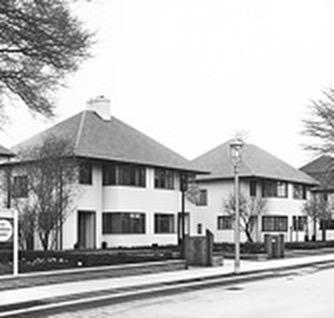
Although the type was widely used in West and North London, it never spread far across the country. Buyers – and therefore developers – preferred more traditional styles: mock Tudor proved more popular than mock Moderne.
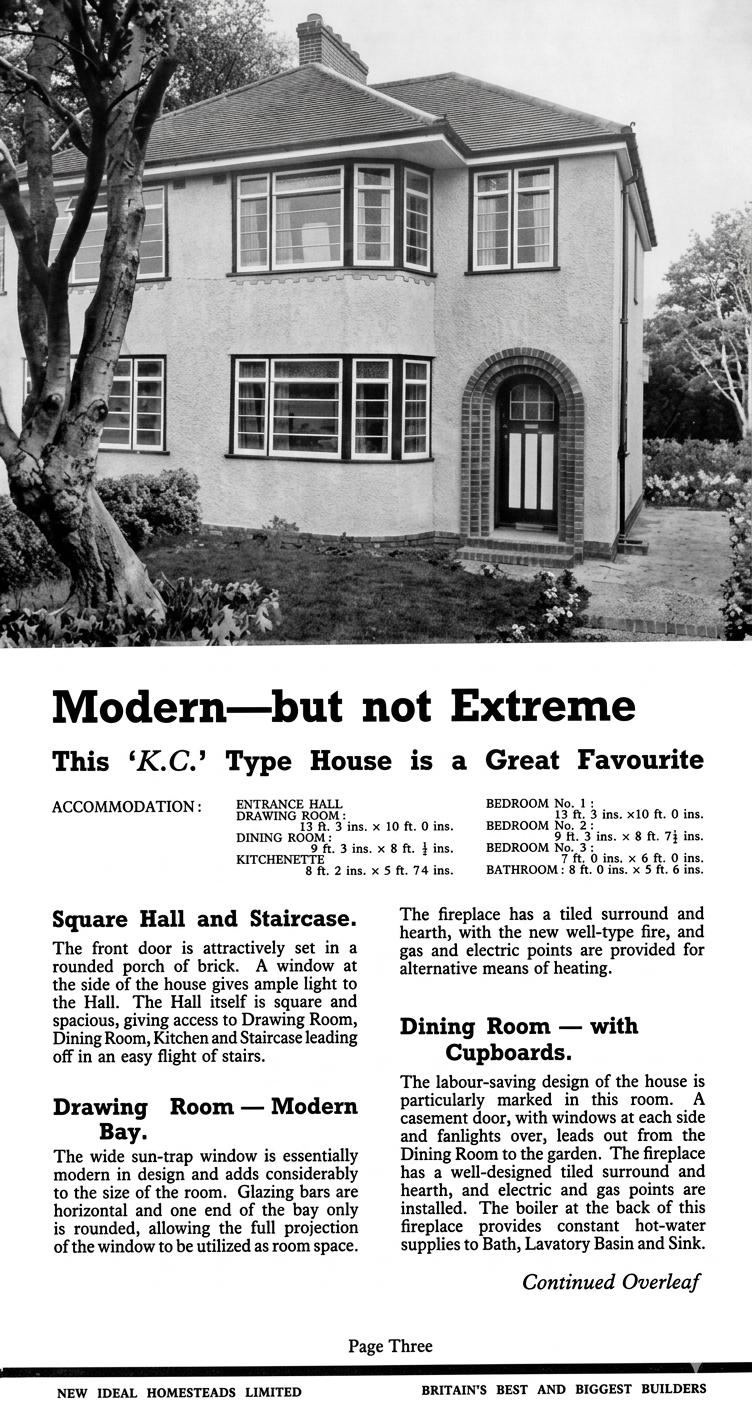
The Moderne style was closely linked to interwar enthusiasm for health, sunlight, and fresh air – Cheltenham’s Lido, for example, opened in January 1935.
Light could flood through curved Crittall windows, while the flat roofs offered space for sunbathing or outdoor dining. In practice, however, this vision failed to capture the imagination of most suburban buyers. Modernism was diluted, as the British public was not prepared to make the imaginative leap and was content to remain with Tudorbethan nostalgia.